
Latest African tobacco industry interference news

Webinaire : Protéger la lutte antitabac en temps de crise – Aller au-delà des actions caritatives de l’industrie du tabac pour trouver des solutions gouvernementales alternatives
L’Africa Centre for Tobacco Industry Monitoring and Policy Research (ATIM), l’African Tobacco Control Alliance (ATCA), le World Health Organization Regional Office for Africa (WHO AFRO) et le Global Center for Good Governance in Tobacco Control (GGTC) organiseront conjointement, le 20 octobre 2026, une consultation régionale virtuelle sur le thème « Protéger la lutte antitabac en […]
Webinar: Protecting Tobacco Control in Times of Crisis – Moving Beyond Tobacco Industry Charity to Alternative Government Solutions
The Africa Centre for Tobacco Industry Monitoring and Policy Research (ATIM), together with the African Tobacco Control Alliance (ATCA), the World Health Organization Regional Office for Africa (WHO AFRO), and the Global Center for Good Governance in Tobacco Control (GGTC), will jointly organise a virtual regional consultation titled “Protecting Tobacco Control in Times of Crisis: […]

AVIS D’EXPERT : Ce que le Parlement doit faire pour que le projet de loi sur le tabac en Afrique du Sud soit une réussite
Par le professeur Olalekan Ayo-Yusuf, président et directeur de l’École des systèmes de santé et de santé publique de l’Université de Pretoria, et directeur du Centre africain de surveillance de l’industrie du tabac et de recherche sur les politiques antitabac Alors que le Parlement entame l’examen article par article du projet de loi sud-africain sur […]
EXPERT OPINION: What Parliament Needs To Get Right In SA’s Tobacco Control Bill
By Professor Olalekan Ayo-Yusuf, Chairperson/Head of the School of Health Systems and Public Health at the University of Pretoria, and Director of the Africa Centre for Tobacco Industry Monitoring and Policy Research As Parliament moves into clause-by-clause consideration of South Africa’s Tobacco Products and Electronic Delivery Systems Control Bill, much of the debate has crystallised […]
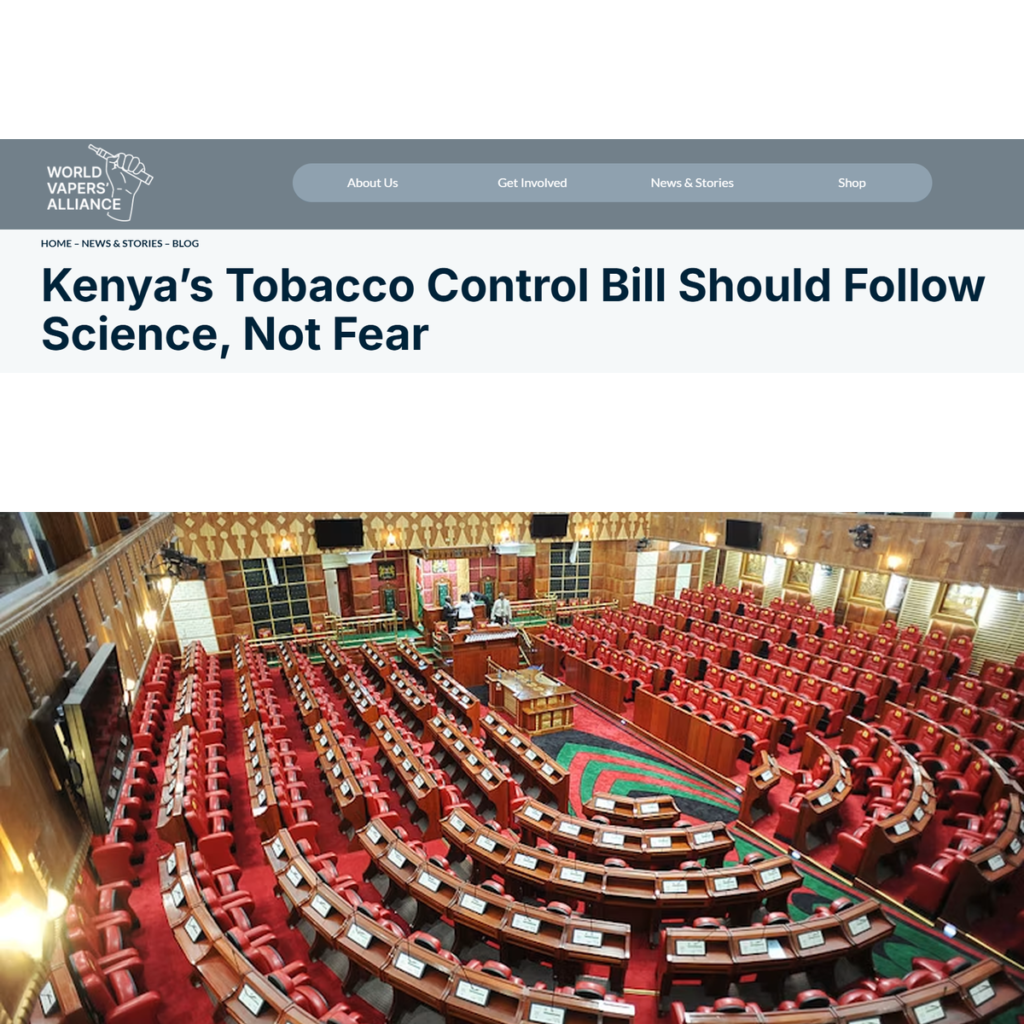
Who Speaks for Consumers? Industry Funding Links Raise Transparency Questions Over Vaping Advocacy on Kenya’s Tobacco Bill
ATIM calls for transparency as internationally connected vaping advocacy group seeks weaker regulation of new nicotine products As Kenya considers amendments to strengthen its tobacco-control legislation, an international vaping advocacy organisation has entered the policy debate calling for differentiated regulation of vaping and other nicotine products. On 3 July 2026, the World Vapers’ Alliance (WVA) […]
Qui défend les intérêts des consommateurs ? Les liens de financement avec l’industrie soulèvent des questions de transparence concernant la défense des intérêts des fabricants de cigarettes électroniques dans le cadre du projet de loi sur le tabac au Kenya
L’ATIM appelle à la transparence alors qu’un groupe de défense du vapotage, actif à l’échelle internationale, milite en faveur d’une réglementation moins stricte des nouveaux produits à base de nicotine Alors que le Kenya envisage d’apporter des modifications visant à renforcer sa législation en matière de lutte contre le tabagisme, une organisation internationale de défense […]

Le Nigeria devrait renforcer la lutte contre le tabagisme, et non inscrire dans la loi la « réduction des risques », une approche défendue par l’industrie.
L’ATIM se joint à la société civile nigériane pour demander un examen minutieux des amendements susceptibles d’affaiblir les contrôles sur les nouveaux produits à base de nicotine Le African Center for Tobacco Industry Monitoring and Policy Research (ATIM) soutient les appels lancés par les organisations de la société civile nigérianes engagées dans la lutte antitabac […]
Nigeria Should Strengthen Tobacco Control, Not Embed Industry-Favoured “Harm Reduction” in Law.
ATIM joins Nigerian civil society in calling for scrutiny of amendments that could weaken controls on new nicotine products The Africa Centre for Tobacco Industry Monitoring and Policy Research (ATIM) supports calls by tobacco control civil society organisations in Nigeria for urgent reconsideration of proposed amendments to the National Tobacco Control Act that would introduce […]

Le lobbying rémunéré en faveur du vapotage, lié aux intérêts de l’industrie, cible le projet de loi sud-africain sur le tabac à un stade crucial de son examen clause par clause
Business Tech a récemment publié un contenu « Partenaire » rémunéré, présenté par Vaping Saved My Life (VSML) et rédigé par son cofondateur, qui avait précédemment déclaré avoir effectué des missions de conseil pour la Vapour Products Association of South Africa (VPASA), un organisme sectoriel représentant les intérêts commerciaux du secteur de la vapotage et […]
What is Article 5.3 and why is it important?
Understanding the convention articles
Article 5.3 is the section of the Framework Convention for Tobacco Control which provides guidance on how to handle interference from the tobacco industry. There are four principles:
* There is a fundamental and irreconcilable conflict between the tobacco industry’s interests and public health policy interests.
* Parties, when dealing with the tobacco industry or those working to further its interests, should be accountable and transparent.
* Parties should require the tobacco industry and those working to further its interests to operate and act in a manner that is accountable and transparent.
* Because their products are lethal, the tobacco industry should not be granted incentives to establish or run their businesses.
Under these guidelines, there are eight recommendations. These include:
* Raise awareness about tobacco industry interference among all those working in all branches of government and among the public.
* Avoid any interaction with the tobacco industry except where necessary to enable them to effectively regulate tobacco products and the tobacco industry. Where interactions do take place, they must be conducted transparently.
* Reject partnerships, non-binding or non-enforceable agreements with the industry, including voluntary codes of conduct, industry-sponsored tobacco control initiatives or industry offers to assist with the development of tobacco control legislation or policy.
* Develop clear policies on avoidance of conflicts of interest for government officials, employees, consultants and contractors. A wide range of specific steps are recommended within the guidelines.
* Require disclosure of information by the tobacco industry to promote transparency. This must include tobacco production, manufacture, sales and content, as well as industry lobbying, philanthropy, political donations.
* Denormalise and regulate activities described by the industry as “socially responsible” and expose the real intent – such as making the industry seem benevolent towards the population – behind these activities. ‚
* Do not give any benefits, tax exemptions or other incentives to the tobacco industry.
* Treat any state-owned tobacco industry no differently from privately-owned tobacco companies